Paper loyalty cards are easy to understand. They are also easy to lose, forget or leave at home.
A customer may intend to return, but the card itself does little to help them remember. Once they leave your business, the paper card gives you very little ability to stay connected with them between visits.
A digital loyalty card offers a more practical alternative. It places the loyalty card on the customer's phone, usually inside Apple Wallet or Google Wallet, where it can be easier to find and update.
The technology is useful. The underlying idea is familiar.
Give customers a clear reason to return, make progress easy to see, and remove unnecessary friction from the next visit.
What is a digital loyalty card?
A digital loyalty card is an electronic version of a traditional loyalty or stamp card.
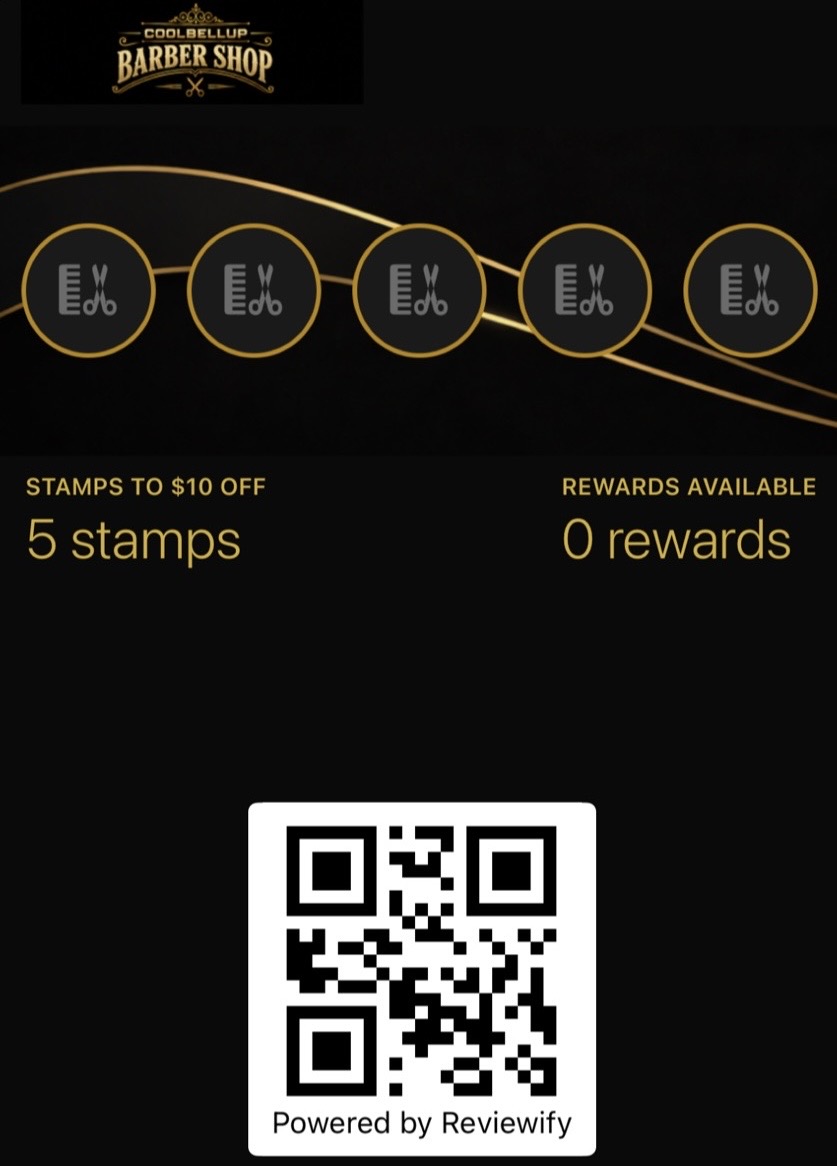
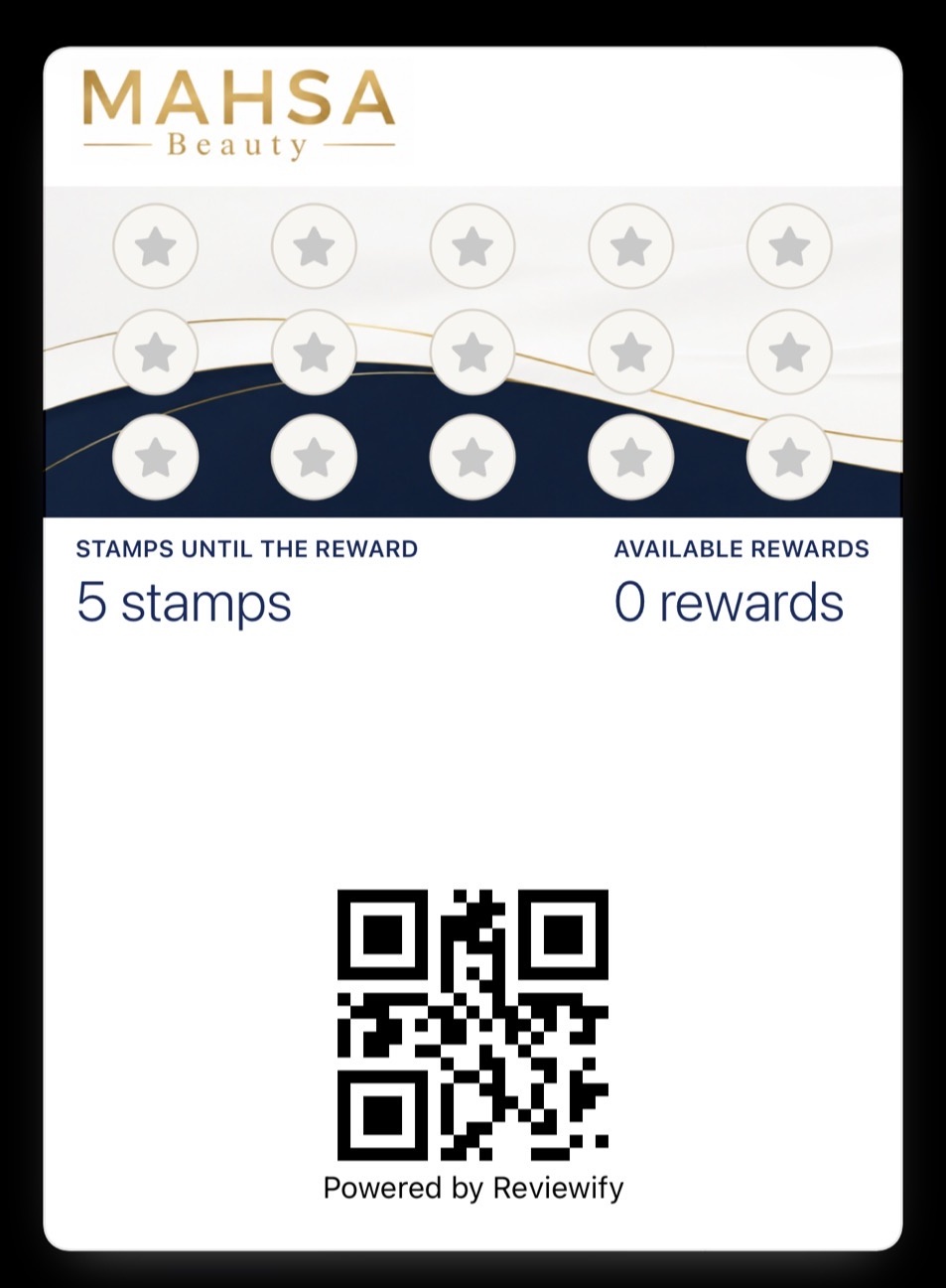
Instead of carrying a paper card, customers save a branded card to a mobile wallet. Depending on their device, this may be Apple Wallet or Google Wallet.
The card may show:
- The business name and logo
- A stamp, visit or points balance
- Progress towards the next reward
- The reward rules
- A barcode or QR code for scanning
- Store details or contact information
A digital loyalty card is not necessarily a separate mobile app. In many cases, the customer adds the card to the wallet already available on their phone.
That can make joining simpler than asking customers to download an app, create a password and remember another login.
How do digital loyalty cards work?
The customer journey is usually straightforward:
- 01The customer joins by scanning a QR code, tapping a link or receiving an invitation.
- 02They add the card to Apple Wallet or Google Wallet.
- 03They present the card during a purchase or appointment.
- 04The business records the visit, purchase or points using a compatible scanning or loyalty system.
- 05The card updates to show the customer's new progress.
- 06The customer returns to continue working towards the reward.
A café might use one stamp per eligible purchase. A salon might reward completed appointments. A retailer might award points based on spend.
The important part is not the particular technology. It is that the process is clear for both the customer and the team.
Apple Wallet
Apple Wallet is the built-in wallet on supported iPhone devices. A business can provide an "Add to Apple Wallet" link or QR-code journey so a customer can save a loyalty pass to their phone.
The pass can display the customer's current progress and other useful information. Depending on the system used to create and manage it, the pass may also receive updates when the business changes the customer's balance or reward status.
Google Wallet
Google Wallet allows customers to save loyalty and membership cards on supported Android devices. Google's guidance explains that customers can add a loyalty card through a supported merchant or loyalty programme, then present the barcode or membership number at checkout.
Businesses considering Google Wallet can review the Google Wallet loyalty card documentation.
Support and available functionality can vary between providers and systems. It is worth checking exactly how a platform handles issuing cards, scanning, updates and reward redemption before choosing one.
Digital loyalty cards versus paper loyalty cards
Paper cards still have a place. They are inexpensive, familiar and can work well for a simple programme.
Digital cards offer different advantages.
| Consideration | Paper loyalty card | Digital loyalty card |
|---|---|---|
| Access | Can be lost or left at home | Usually stored on the customer's phone |
| Progress | Stamps or marks are recorded manually | Progress can be updated digitally |
| Customer connection | Very limited between visits | Wallet updates may provide a way to stay connected |
| Administration | Often manual | May be managed through loyalty software |
| Customer data | Usually little or none | May provide customer activity data, subject to consent and privacy requirements |
| Setup | Simple to start | Requires a suitable platform and process |
| Team workflow | Familiar but manual | Requires staff training and reliable scanning |
Digital is not automatically better.
A paper card may be appropriate for a small business with a very simple offer and low transaction volume. A digital card becomes more useful when you want clearer progress tracking, fewer lost cards and a way to communicate relevant updates after the customer leaves.
The right choice depends on the customer journey, the team's capacity and the systems already in place.
Why repeat visits matter for local businesses
Local businesses often depend on customers choosing them more than once.
A café relies on return visits. A barber relies on the next appointment. A pet groomer, beauty business, takeaway shop or fitness studio may all benefit when a satisfied customer remembers to come back.
Repeat visits matter because they build continuity. Customers become familiar with the service, the team and the experience. The business also has an opportunity to understand what those customers value.
A loyalty programme cannot fix poor service, unsuitable pricing or an inconvenient location. It does not guarantee that customers will return.
It can, however, make the next visit more visible and give a customer a simple reason to choose your business again.
That is the practical role of loyalty.
Five ways to structure a digital loyalty reward
The best structure is one customers understand quickly and your business can deliver consistently.
1. Stamp or visit-based rewards
Customers earn one stamp for each eligible visit or purchase.
Examples include:
- Buy nine coffees and receive the tenth free
- Complete five car washes and receive a discount
- Attend a set number of classes and receive a reward
This structure suits businesses with frequent visits and relatively consistent purchases.
2. Points-based rewards
Customers earn points for defined actions, such as purchases, visits or selected products.
Points can offer more flexibility than a simple stamp card, but the rules must be easy to explain. Customers should be able to see how points are earned, what they are worth and how they can be redeemed.
3. Spend-based rewards
Customers earn points or credit according to the amount they spend.
This may suit retail and hospitality businesses with a wide range of transaction values. Set the earning rate carefully and check that the reward remains financially sustainable.
4. Tiered or membership rewards
Customers receive different benefits based on their membership level or activity.
For example, a business might offer standard, preferred and premium levels with different privileges. This can work for businesses with a strong membership model, but it creates more rules to explain and manage.
5. Hybrid programmes
A hybrid combines two or more approaches.
A salon might offer a visit-based reward while also giving members an occasional birthday offer. A retailer might combine points with selected member-only benefits.
Start with the simplest structure that fits your business. Complexity should have a clear purpose.
Staying connected after the customer leaves
The main difference between a paper card and a digital wallet card is not only where the card is stored.
A wallet card can remain present after the visit. It may show updated progress, let the customer check their reward status and, where supported, receive useful wallet notifications.
Appropriate updates might include:
- A reward is ready to use
- The customer is close to earning a reward
- A reward is approaching its expiry date
- A relevant change to opening hours
- An occasional offer connected to the loyalty programme
The standard should be restrained.
A wallet is a utility, not a place for constant promotions. Customers should be able to understand why they received an update and what action, if any, is useful.
For more detail, see How wallet notifications help you stay connected with customers.
If the programme later develops enough reliable activity, smarter retention work may become possible. For example, a business may begin to identify customers who have changed their usual visit pattern and decide whether a timely reminder is appropriate.
That is a supporting layer.
The digital loyalty card remains the foundation.
Common digital loyalty programme mistakes
Making the reward too difficult to reach
If customers rarely reach the reward, the programme may lose relevance. Choose a threshold that suits normal customer behaviour and your margins.
Using rules that are hard to explain
Customers should not need a detailed explanation to understand how the programme works. If the team cannot explain it in one or two sentences, simplify it.
Forgetting the staff workflow
A loyalty programme only works when visits are recorded accurately. Train staff, make scanning easy and decide how to handle missed scans, redemptions and refunds.
Sending too many updates
Frequent or irrelevant messages can cause customers to silence or remove the card. Prioritise reward progress and genuinely useful information.
Ignoring privacy and consent
Only collect the information you need. Explain how it will be used. If you send marketing communications by email or SMS, follow relevant Australian privacy and spam requirements and provide a clear opt-out process.
Measuring only sign-ups
A growing number of cards does not necessarily mean the programme is helping. Also review active cards, recorded visits, reward redemptions and customer feedback where those measures are available.
Working alongside booking and POS systems
A digital loyalty card does not always need to replace your booking software or point-of-sale system.
It can sit alongside the systems your business already uses:
- Your booking system continues to manage appointments and reminders.
- Your POS continues to manage payments and sales records.
- The loyalty system records eligible visits, points or rewards.
- Staff use a barcode, QR code or customer identifier to connect the visit to the loyalty record.
Some platforms offer integrations with particular POS or booking systems. Others may require staff to use a separate scanning process.
Before adopting a programme, ask:
- Does it integrate with our current POS or booking system?
- If not, how long does each loyalty transaction take?
- Can staff correct an error?
- How are refunds and cancellations handled?
- Who can access customer information?
- Can customers redeem rewards without creating confusion at checkout?
A simple process that staff follow consistently is more useful than a sophisticated system that slows down service.
How Reviewify helps
Reviewify is a digital loyalty, customer retention and reputation platform for local businesses.
The loyalty experience helps businesses create branded digital cards that customers can keep in Apple Wallet or Google Wallet, record visits or reward progress, and remain connected after leaving the business.
The approach is deliberately practical:
- Choose a loyalty structure that fits the business
- Give customers a card they can access without managing another app
- Make progress visible
- Support relevant wallet updates
- Keep the customer journey connected to feedback and reputation activity where appropriate
Reviewify starts at A$119 per month billed annually, with quarterly and monthly billing also available. Reviewify PRO, which adds advanced automation, Google Business Profile integration and Google review growth, starts at A$249 per month billed annually. You can see how Reviewify works, review the current pricing or create a personalised demo to see what a digital loyalty card could look like for your business before you decide.
Summary
Digital loyalty cards give local businesses a practical way to move beyond paper stamps and manual progress tracking.
They can make rewards easier to access, keep the customer's progress visible and provide a considered way to stay connected after the visit.
Start simply:
- 01Choose a reward customers will understand.
- 02Set a threshold that suits normal behaviour and your margins.
- 03Decide how staff will record each visit or purchase.
- 04Make the card easy to add to Apple Wallet or Google Wallet.
- 05Use updates sparingly and keep them useful.
- 06Review activity and improve the programme over time.
The aim is not to make loyalty complicated.
It is to make the next visit easier to remember.